
Guide
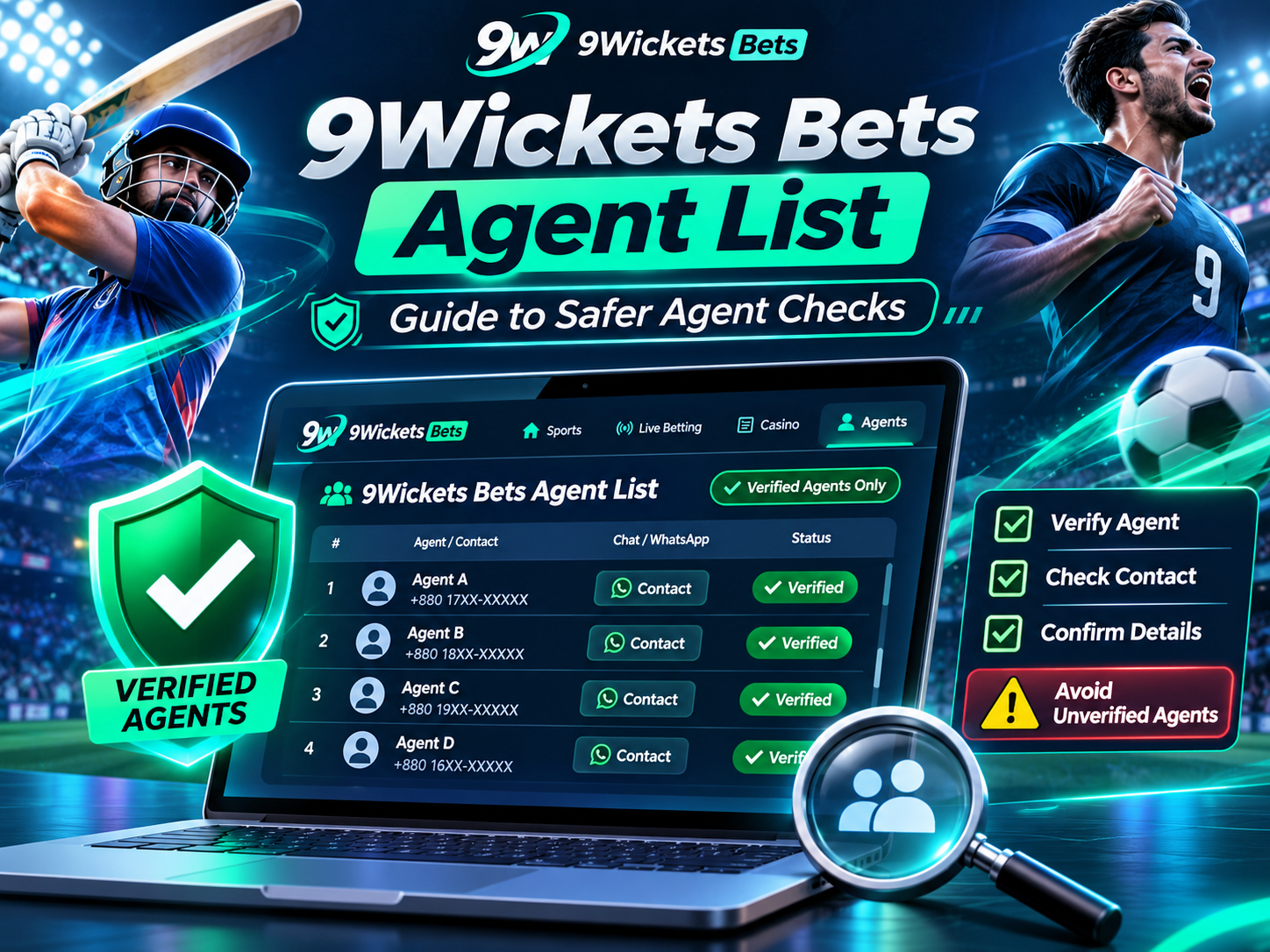
9Wickets Bets Agent List: How to Assess Agent Sources
Published 16 November 2026
9Wickets Bets Agent List: How to Assess Agent Sources
Searching for a 9Wickets bets agent list can lead to several websites, online directories, social media profiles, and independent pages that publish information about betting representatives. However, finding a list does not necessarily mean finding an accurate or trustworthy source. Readers need to understand how these directories work, what different agent labels represent, and which details deserve closer examination.
An agent directory can serve as an information resource, but its quality depends on how its publisher collects, checks, and updates the information. A page may display dozens of representatives while offering little evidence about their identities or current authority. Another directory may contain fewer entries but explain its information sources more clearly.
This article takes a closer look at the structure and credibility of 9Wickets-related agent directories. It examines how to interpret representative categories, assess online listings, compare information sources, understand common administrative terms, and recognise digital security concerns. It also explains how readers can approach conflicting directory information without relying on unsupported claims.
The purpose is to help readers evaluate published information critically. This guide does not verify individual representatives, publish unconfirmed contact details, or guarantee the legitimacy of any third-party directory.
Exploring the Structure of a 9Wickets Agent Network
An agent-based platform directory may organise representatives according to their assigned responsibilities or position within an administrative structure. This arrangement can help readers understand why different representatives appear under different categories.
However, directory terminology does not always follow one universal standard. Two independent websites may use the same title while describing different responsibilities.
Understanding this distinction matters when researching the 9Wickets bets agent list because a category name alone cannot establish a person’s actual authority.
Representative Hierarchy
Some agent networks use a hierarchy to describe relationships between different representatives. A higher-level representative may coordinate several other contacts, while a lower-level representative may handle a narrower set of administrative activities.
This structure can include several labels:
Master agent
Super agent
Senior representative
Sub-agent
General agent
Administrative contact
Not every directory uses all these categories. Some publishers simplify their presentation, while others introduce additional labels.
Readers should examine the explanation attached to each category instead of assuming that every website follows an identical organisational arrangement.
Responsibilities and Assigned Authority
A representative’s position and authority are two separate considerations.
A directory might describe someone as a senior representative, but that description does not automatically establish permission to manage payments, resolve account disputes, change account information, or approve other representatives.
Actual responsibilities require confirmation from an appropriate platform-controlled source.
For informational research, this distinction helps prevent misunderstandings about what an agent can and cannot legitimately do.
What Makes an Agent Directory Informative?
The usefulness of an online directory depends on the quality of its information rather than the number of entries it displays.
A detailed directory should make it easier to understand where its information comes from, how it organises entries, and when someone last reviewed the published details.
Consider these important characteristics when evaluating an agent listing.
Clear Identification
A directory should distinguish individual entries rather than present an unstructured collection of names.
An identification reference, where available, can help readers distinguish representatives who share similar names. However, an ID displayed on an independent website does not independently authenticate the person behind it.
Understandable Categories
Well-organised information should explain what each representative category means.
For example, a page that lists master agents and sub-agents should clarify whether those labels describe administrative positions, directory classifications, or another arrangement.
Without an explanation, readers may interpret the categories incorrectly.
Information Dates
Publication dates and update records provide useful context.
A page that has not received an update for several months may still appear in search results. Search engines do not automatically remove old directories simply because their contact information has changed.
A recent update date also does not guarantee accuracy, but it helps readers ask the right questions about the information’s freshness.
Source Transparency
The publisher should explain whether the information comes from a platform-controlled source, an independently maintained database, or user-submitted entries.
This distinction allows readers to assess the level of confidence they should place in a listing.
A directory that clearly identifies its limitations offers more useful context than one that makes broad authenticity claims without supporting evidence.
A Practical Method for Evaluating 9Wickets Directory Sources
Search engines can display several pages for the same keyword. Their appearance in search results does not mean that they share the same ownership, information source, or verification process.
Instead of selecting the first result automatically, use a structured evaluation process.
Examine the Website’s Identity
Begin with the domain itself.
Check whether the website clearly identifies its publisher, provides relevant information about its purpose, and explains how visitors should interpret its directory.
Look for a consistent identity across the website’s main pages. Unexplained changes in branding, missing contact information, or contradictory descriptions may justify further investigation.
A professional design alone does not establish credibility.
Review the Directory’s Editorial Approach
Read the introduction and supporting information around the listing.
Does the publisher explain its selection criteria? Does it distinguish confirmed details from user-submitted information? Does it explain how it handles outdated entries?
These questions help reveal whether the page functions as a carefully maintained information resource or simply as a collection of names.
Check for Internal Consistency
Compare the information presented across the directory.
For example, an entry might display one representative category in its heading and another in its description. A contact reference may also differ between the directory and a linked profile.
Such inconsistencies do not automatically prove fraud, but they reduce the reliability of the information until someone resolves them.
Assess the Website’s Information Boundaries
Reliable informational writing should distinguish between confirmed facts, publisher claims, and general explanations.
A directory should not present an unverified person as an officially authorised representative without adequate evidence.
Similarly, a website should avoid promising financial returns or suggesting that a representative can guarantee particular betting outcomes.
Look Beyond Search Engine Rankings
Search position reflects many factors, including relevance, website structure, content quality, and search-engine systems.
A high-ranking page does not necessarily provide the most accurate agent information.
Use search results to discover sources, not as proof of official status.
Important Terms Found in Agent Listings
Different websites may use specialised language when describing their representatives. Understanding these terms makes directory research easier.
Agent ID
An agent ID is an identification reference associated with a particular directory entry or representative.
It may help distinguish one entry from another. Nevertheless, readers should not treat an ID as independent proof of authorisation because an outside publisher can reproduce or invent identification numbers.
Parent Agent
Some directory systems use the expression parent agent to describe a representative associated with other agents in a hierarchy.
The term can help explain relationships between entries, but its meaning depends on the particular network.
Referral Relationship
A referral relationship generally describes how one representative connects another person to a service or organisational structure.
Readers should distinguish referral activity from administrative authority. Introducing someone does not necessarily give the referring person permission to approve transactions or manage accounts.
Agent Status
A directory may use status labels such as active, inactive, pending, or unavailable.
These labels can describe the publisher’s internal records rather than the platform’s actual authorisation status.
Before treating a status as official, establish who assigned it and what evidence supports it.
Verification Record
A verification record describes information collected during an identity or authorisation check.
The value of such a record depends on the organisation that performed the check, the method it used, and the date of verification.
A badge or verification label on an independent website should not automatically receive the same trust as confirmation from the platform itself.
Why Different 9Wickets Agent Lists May Show Different Information
Readers sometimes encounter conflicting information while researching the 9Wickets bets agent list. One website may display a representative under one category, while another page uses a different title or shows an alternative contact reference.
Several factors can explain these differences.
Independent Directory Management
Different publishers may collect information separately. They may use different submission methods, update schedules, and editorial standards.
As a result, their directories may not match.
Changes in Contact Information
Representatives can change their communication channels over time. A telephone number or messaging profile that appeared in an older publication may no longer belong to the same person.
Old pages can remain accessible even after the original publisher stops maintaining them.
Different Classification Systems
One website may group representatives by organisational level, while another may organise them by location, directory ID, or another category.
This difference can create the impression of conflicting information even when the publishers use different classification methods.
Duplicate Entries
A representative may appear under slightly different names or descriptions across multiple pages.
Duplicate records can make a directory appear larger than its actual number of unique entries.
Unverified User Submissions
Some websites may accept information from visitors or outside contributors.
Without an effective review process, a publisher may display inaccurate information, copied profiles, or outdated contact details.
For these reasons, readers should avoid combining entries from unrelated websites into a single supposedly official directory.
Digital Identity and the Problem of Online Impersonation
Online identity is particularly important when a directory includes direct communication links.
A person can copy a representative’s display name, profile photograph, logo, and description without obtaining permission from the original account holder.
This creates a serious challenge: a profile can look familiar without belonging to the person it claims to represent.
Display Names Do Not Establish Identity
Messaging applications allow users to choose display names that resemble those of other people.
A matching name therefore provides limited evidence about account ownership.
Readers should examine the complete identity information and obtain independent confirmation through a trusted channel.
Profile Images Can Be Reused
A familiar photograph can appear on several unrelated profiles.
Image similarity alone cannot establish that two accounts belong to the same person.
Lookalike Domains Can Cause Confusion
Fraudulent websites sometimes use domain names that resemble established brands.
Small differences in spelling, punctuation, or domain extensions can be easy to overlook.
Check the complete domain carefully before entering information or following instructions from a website.
Messaging Links Need Context
A direct messaging link may connect visitors to an individual account rather than a verified organisational support channel.
Before trusting such a link, establish who controls it and whether the relevant organisation confirms that contact method.
Payment Information and Administrative Disputes
Payment-related information deserves special attention because a mistaken assumption about an agent’s identity can create financial problems.
A directory may display a representative’s contact details, but that information does not automatically confirm the ownership of a payment account.
Readers should keep identity verification and transaction verification separate.
Understand the Difference Between a Contact and a Payment Recipient
A person may communicate using one identity while requesting payment through another account.
This creates a question that a directory entry alone cannot answer: does the payment destination belong to an authorised recipient?
Do not assume that a familiar display name proves account ownership.
Keep Transaction Records Organised
Where a payment dispute arises, relevant records can help explain what happened.
Useful records may include:
Transaction reference numbers.
Payment dates and timestamps.
Relevant correspondence.
Provider-issued transaction confirmations.
Records of reported discrepancies.
Store these documents securely. Remove sensitive details before sharing any material outside an appropriate support or dispute-resolution process.
Recognise Pressure-Based Requests
Urgent payment demands, threats of immediate account closure, and unexplained administrative charges deserve careful scrutiny.
A legitimate identity check should not require you to reveal a private password, OTP, recovery code, or financial PIN.
If a request appears suspicious, pause the interaction and contact the relevant service through an independently established communication channel.
Know Where to Report a Problem
When a transaction involves a bank or mobile financial service, contact that provider through its verified support service.
For suspected identity theft, preserve the relevant evidence and use the appropriate reporting channels available in your jurisdiction.
Do not rely on the person involved in the disputed transaction to investigate the complaint independently.
How Website Owners Can Publish Better Agent Information
The quality of a directory also depends on the people who publish and maintain it.
Website owners who manage agent-related information should establish clear editorial procedures rather than treating the page as a static list.
Create a Defined Information Policy
Explain what the directory covers, which information it accepts, and what the publisher can independently verify.
Avoid broad statements that imply official authorisation without supporting documentation.
Separate Verified and Unverified Records
If the publisher cannot confirm a person’s current status, the page should communicate that limitation clearly.
Do not use labels such as officially approved or authorised unless reliable evidence supports them.
Establish an Update Schedule
Directory managers should review records regularly and remove or correct information that no longer meets their publication standards.
A visible last-reviewed date helps readers understand the age of the information.
Provide a Correction Process
A contact mechanism for reporting inaccurate information can improve editorial quality.
Publishers should review correction requests carefully and avoid changing records solely because an unidentified person demands a modification.
Protect Personal Information
Only publish information that the publisher has a legitimate reason and appropriate permission to display.
Avoid exposing private identification documents, payment credentials, personal addresses, or other sensitive details.
Use Accurate Structured Data
Website owners may use suitable structured data to describe articles, webpages, or other eligible content.
However, schema markup cannot authenticate an agent, validate a telephone number, or prove that a directory belongs to a betting platform.
Structured data should describe what a page genuinely contains rather than make unsupported claims about its authority.
Search Intent and the Importance of Accurate 9Wickets Information
The phrase 9Wickets bets agent list can represent several different research needs.
Some visitors want to understand the agent hierarchy. Others want to compare directory sources, investigate a particular contact, or learn how agent identification works.
A useful article should address these information needs without pretending that every searcher has the same objective.
Informational Research
Readers who want to understand the agent system need definitions, explanations, and context.
A well-organised guide should explain the difference between directory categories and verified platform permissions.
Source Comparison
People comparing websites need information about domain identity, publication dates, verification methods, and editorial transparency.
These factors provide a more meaningful comparison than the number of entries displayed.
Identity Research
Someone investigating a particular profile needs reliable evidence connecting that identity with the claimed representative.
A name, photograph, or copied identification number cannot establish that relationship independently.
General Security Awareness
Other readers may simply want to understand how to protect their personal information while researching online services.
Clear guidance about passwords, payment credentials, impersonation, and suspicious requests helps address this need.
By covering these distinct purposes, an informational page can provide value without repeating the same keyword throughout every paragraph.
Legal Awareness and Responsible Decision-Making
Researching a betting-related agent directory should also involve an understanding of the applicable legal environment.
Online gambling regulations differ across countries and sometimes between regions within the same country.
A service’s availability on the internet does not establish that its operation or use complies with local law.
Before engaging with any gambling-related service, check the applicable rules through reliable government or regulatory sources.
Age restrictions, licensing requirements, advertising rules, payment restrictions, and consumer protections may vary by jurisdiction.
Financial risk also deserves serious consideration. Sports results remain uncertain, and neither an agent nor a prediction service can eliminate that uncertainty.
Anyone who experiences financial pressure, repeated losses, or difficulty controlling gambling should consider stopping and seeking appropriate professional support.
Responsible decision-making starts with understanding both the legal conditions and the possible consequences.
Final Assessment: What Should a Reliable Directory Communicate?
A useful 9Wickets agent directory should help readers understand the information it publishes, where that information comes from, and what its limitations are.
The most important qualities include clear identification, understandable categories, transparent sourcing, accurate publication dates, and a practical method for reporting mistakes.
Readers should also recognise the difference between a third-party listing and an independently confirmed platform representative. These two things do not carry the same level of authority.
A directory that publishes many entries without explaining its verification process may create confusion rather than resolve it. Likewise, a polished website or prominent search position cannot replace reliable evidence.
When researching the 9Wickets bets agent list, approach every source with the same basic principles: examine its ownership, question unsupported claims, compare identifying details, and protect private information.
Good directory research depends on evidence, transparency, and careful judgement—not simply the number of names a webpage displays.
Keep reading
Related guides
Guide
BD Betting Site: Risks, Legality and Online Safety
BD Betting Site: Risks, Legality and Online SafetyThe growing popularity of digital sports coverage has increased public interest in searches related to a BD…
Read the guide →
Guide
Official 9Wickets Site: A Complete Visitor’s Guide
Official 9Wickets Site: Website Identity, Security and Legal Awareness Introduction The search for the Official 9Wickets Site raises several important questions about online identity,…
Read the guide →
Guide
9Wicket APK New Version: Android Access and Safety Guide
9Wicket APK New Version: Android Access and Safety GuideFinding a reliable mobile application requires more than searching for a download button. The 9Wicket APK…
Read the guide →Ready to put this guide to work?
Open a 9Wickets account with bKash, Nagad or Rocket, or talk to support if you need a hand.