
Guide
9Wickets API Guide: Features, Access, and Integration
9Wickets API Guide: Features, Access, and Integration Modern betting platforms increasingly rely on application programming interfaces to improve connectivity, automate […]
Published 11 July 2026 Updated 21 July 2026
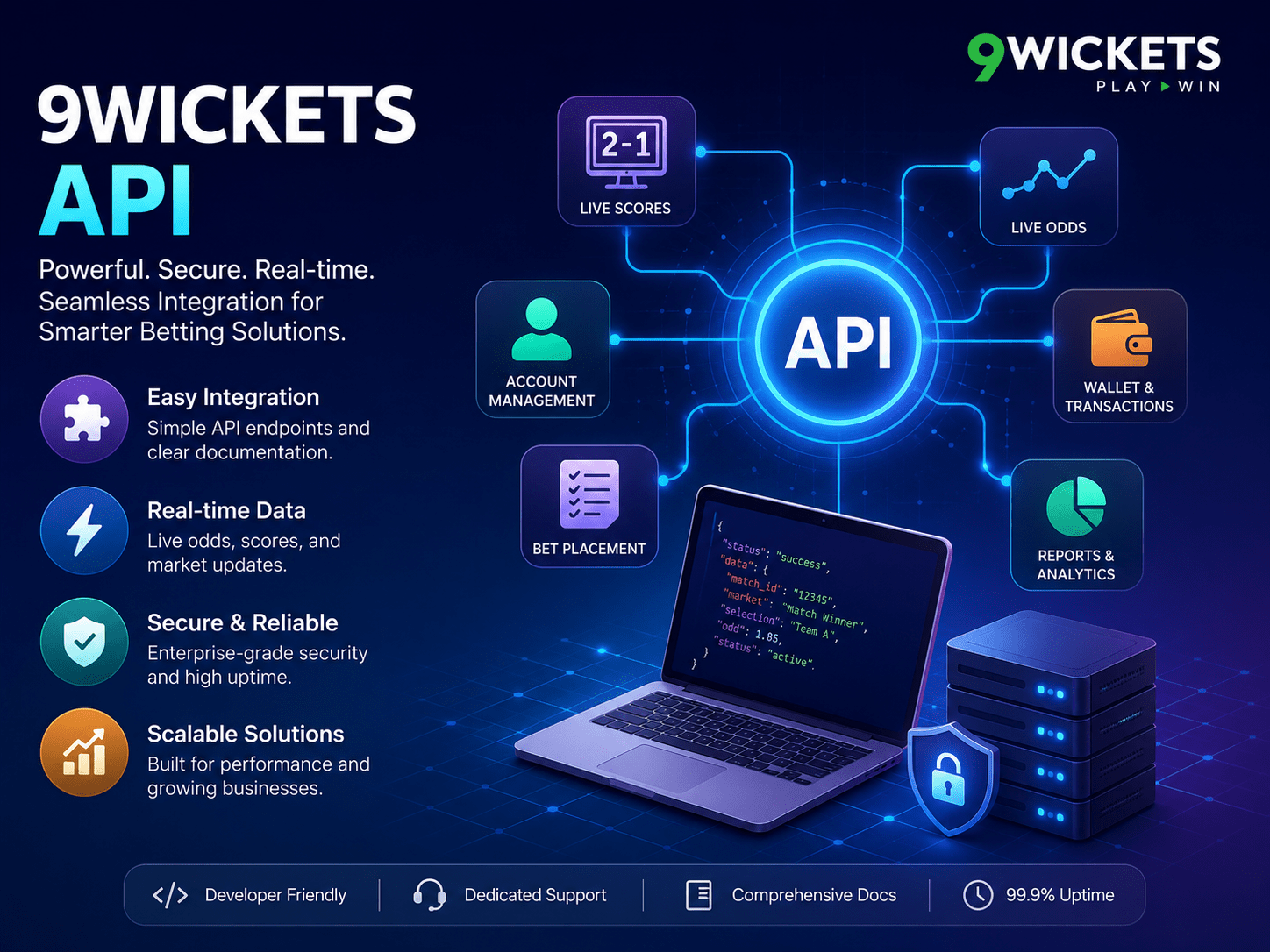
9Wickets API Guide: Features, Access, and Integration
Modern betting platforms increasingly rely on application programming interfaces to improve connectivity, automate workflows, and enhance the overall user experience. When people search for the 9wickets api, they are often looking for information about how the platform exchanges data, whether integrations are available, and what developers or business partners should know before attempting any implementation.
It is important to understand that not every betting platform publicly provides a developer API. In many cases, API access is limited to authorized partners, agents, or approved businesses. Therefore, before planning any software integration, users should always verify whether official API documentation or partner access is available.
This guide explains the concept of the 9wickets api, possible use cases, expected features, integration considerations, security practices, and best approaches for businesses and developers. Instead of relying on assumptions, this article focuses on general API principles and practical information that can help readers better understand how sportsbook APIs typically operate.
What Is 9Wickets API?
The 9wickets api refers to an application programming interface that may allow authorized systems to exchange information with the 9Wickets platform. APIs act as communication bridges between different software applications, enabling secure data transfers without requiring manual interaction.
In general, sportsbook APIs can support activities such as:
- User account verification
- Match information retrieval
- Odds updates
- Bet placement requests
- Transaction status
- Balance information
- Settlement updates
- Reporting tools
Actual availability depends entirely on the platform’s official policies. Many operators restrict these capabilities to verified partners rather than offering public access.
Understanding Sportsbook APIs
An API, or Application Programming Interface, enables two software systems to communicate through predefined requests and responses.
For example:
- A mobile application requests current football odds.
- The server processes the request.
- The API returns structured data.
- The app displays updated information.
Everything happens within milliseconds.
Instead of manually updating data, APIs automate communication while reducing errors and improving speed.
For betting platforms, APIs are essential because sports events generate constant updates throughout the day.
Why Automation Matters
Without APIs, every update would require manual input.
Imagine updating:
- Thousands of live odds
- Hundreds of football matches
- Cricket score changes
- Tennis point-by-point events
- Basketball quarter updates
Automation makes these updates practical and efficient.
Real-Time Information
One major advantage of sportsbook APIs is real-time synchronization.
Information may include:
- Live scores
- Odds movements
- Match status
- Market suspension
- Settlement results
Fast updates improve the experience for both users and platform operators.
Why APIs Matter for Betting Platforms
Sports betting platforms process enormous amounts of information every minute.
These include:
- Sporting events
- User requests
- Deposits
- Withdrawals
- Bet confirmations
- Settlement calculations
- Live market updates
Managing all these processes manually would be inefficient.
APIs allow software systems to exchange information automatically, improving accuracy and reducing delays.
Faster Data Delivery
Sports data changes continuously.
Examples include:
- Goal scored
- Red card issued
- Match postponed
- Rain interruption
- Market suspended
- Odds adjustment
APIs distribute these updates almost instantly.
Better User Experience
Modern users expect:
- Fast loading
- Live updates
- Accurate balances
- Immediate confirmations
Efficient APIs help platforms meet these expectations.
Improved Reliability
Automation reduces:
- Human mistakes
- Duplicate entries
- Missing information
- Slow reporting
Reliable communication creates a smoother operational workflow.
Possible Features of 9Wickets API
Although official functionality depends on platform authorization, sportsbook APIs commonly include several practical capabilities.
1. Account Information
Authorized applications may retrieve information such as:
- Account ID
- User status
- Currency
- Verification state
Sensitive personal information should always remain protected.
2. Wallet Information
Some APIs provide:
- Available balance
- Bonus balance
- Transaction history
- Wallet updates
Applications can display current balances without requiring manual refreshes.
3. Match Data
Sportsbook APIs often provide access to:
- Upcoming fixtures
- Match schedules
- Tournament names
- Team information
- Competition details
This allows applications to present organized sports content.
4. Live Odds
Odds are among the most frequently requested API resources.
Common markets include:
- Match winner
- Over/under
- Handicap
- Both teams to score
- First-half markets
- Player specials
Live odds can change rapidly based on ongoing events.
5. Bet Requests
Some partner APIs allow authorized systems to submit betting requests securely.
Typical workflow:
- Select market.
- Validate odds.
- Confirm stake.
- Submit request.
- Receive confirmation.
- Record transaction.
6. Settlement Updates
Once an event concludes, APIs may provide:
- Win status
- Loss status
- Void bets
- Refund information
- Settlement timestamps
Applications can automatically update user records.
7. Reporting Functions
Business partners often require reporting features.
Examples include:
- Daily summaries
- Weekly reports
- Monthly activity
- Transaction logs
- User statistics
- Revenue reports
Reports help administrators monitor overall platform performance.
Common API Use Cases
Different organizations use sportsbook APIs for different purposes.
Mobile Applications
A betting application may use APIs to:
- Display live events
- Show current odds
- Retrieve balances
- Update betting history
- Refresh match information
Agent Management Systems
Authorized agents may use APIs to manage:
- Customer accounts
- Wallet operations
- Reports
- Transaction tracking
- Activity monitoring
Business Dashboards
Administrative dashboards often rely on APIs to display:
- Active users
- Daily turnover
- Event statistics
- Payment summaries
- Risk analysis
Data Analytics
Analysts may process API data to understand:
- User activity
- Market trends
- Betting patterns
- Peak traffic hours
- Popular sports
These insights can support operational decision-making while respecting privacy and applicable regulations.
API Authentication Methods
Authentication is one of the most important aspects of any API. Before an application can access protected resources, it must prove that it has permission to communicate with the server.
If the 9wickets api is available for approved partners, authentication helps ensure that only authorized systems can retrieve or submit data. Proper authentication protects user accounts, financial information, and platform operations from unauthorized access.
API Keys
Many APIs use an API key as the first layer of identification.
An API key is typically a unique string assigned to a partner or application. Every request sent to the server includes this key so the platform can recognize the requesting system.
Common advantages include:
- Easy identification of applications
- Access management
- Request tracking
- Usage monitoring
- Basic security
API keys should never be shared publicly or embedded directly in client-side code.
Access Tokens
Modern APIs often use access tokens instead of permanent credentials.
Access tokens offer several advantages:
- Limited validity period
- Better security
- Easier revocation
- Improved session management
After the token expires, the application usually needs to request a new one using a secure authentication process.
OAuth Authentication
Large platforms frequently implement OAuth authentication.
OAuth allows users or partner applications to access specific resources without exposing passwords.
Benefits include:
- Stronger account protection
- Controlled permissions
- Secure authorization
- Easier third-party integrations
Although not every sportsbook platform uses OAuth, it has become a widely accepted industry standard.
Multi-Layer Authentication
Some APIs require more than one verification method.
Examples include:
- API Key
- Access Token
- Digital Signature
- IP Whitelisting
- Timestamp Validation
Using multiple security layers reduces the risk of unauthorized access.
REST API Structure
Many modern APIs follow REST (Representational State Transfer) principles.
REST APIs are popular because they are simple, scalable, and compatible with most programming languages.
Typical HTTP methods include:
| Method | Purpose |
|---|---|
| GET | Retrieve information |
| POST | Create new data |
| PUT | Update existing records |
| DELETE | Remove information |
REST APIs usually communicate using JSON format, making data easy for applications to process.
Request Example
A typical request may include:
- Endpoint URL
- Authorization header
- Request method
- Parameters
- Request body (if required)
The server processes the request and returns a structured response.
JSON Response Format
JSON has become the preferred format for API communication because it is lightweight and easy to parse.
A response may include:
- Status
- Message
- Data
- Timestamp
- Request ID
Consistent formatting helps developers build reliable applications.
HTTP Status Codes
Most APIs use standard HTTP status codes to indicate the result of a request.
Common examples include:
| Code | Meaning |
|---|---|
| 200 | Request completed successfully |
| 201 | Resource created |
| 400 | Invalid request |
| 401 | Authentication required |
| 403 | Access denied |
| 404 | Resource not found |
| 429 | Too many requests |
| 500 | Internal server error |
Understanding these responses helps developers troubleshoot issues more efficiently.
Request Validation
Before processing a request, APIs typically validate incoming data.
Validation may include checking:
- Required fields
- Accepted values
- Authorization
- Request format
- Security rules
Proper validation helps maintain system stability and prevents invalid or malicious requests.
Parameter Validation
For example, an API may verify:
- Match ID
- Market ID
- Stake amount
- Currency
- Language
- Region
Incorrect values are usually rejected before processing begins.
Data Integrity
Good APIs also verify that transmitted information has not been modified during communication.
Integrity checks reduce the chance of corrupted or incomplete data reaching the platform.
Rate Limits
API providers often restrict how many requests an application can send within a certain period.
Rate limiting protects servers from excessive traffic and helps maintain stable performance for all users.
For example, limits may be based on:
- Requests per minute
- Requests per hour
- Daily quotas
- Concurrent connections
Applications should respect these limits to avoid temporary restrictions.
Why Rate Limits Exist
Without limits, automated systems could overwhelm the server.
Rate limiting helps:
- Prevent abuse
- Improve reliability
- Reduce server load
- Ensure fair usage
- Maintain consistent performance
Developers should design applications to handle rate-limit responses gracefully.
Error Handling
No API is perfect, and occasional errors are expected.
Well-designed applications should anticipate and handle errors without crashing.
Common scenarios include:
- Authentication failure
- Invalid request
- Timeout
- Network interruption
- Temporary server maintenance
- Service unavailable
Handling these situations properly improves the user experience.
Logging Errors
Applications should record important errors for future investigation.
Useful information includes:
- Request ID
- Timestamp
- Error code
- Endpoint
- Response message
Detailed logs make troubleshooting much easier.
Retry Strategy
Some temporary errors can be resolved automatically.
A retry strategy may involve:
- Waiting briefly
- Sending the request again
- Limiting retry attempts
- Reporting persistent failures
This approach prevents unnecessary server load while improving reliability.
Integration Workflow
Businesses planning to use the 9wickets api should follow a structured integration process.
Although the exact steps depend on the platform’s official documentation, a typical workflow includes the following stages.
Step 1: Obtain Authorization
Before accessing protected endpoints, organizations generally need approval from the platform.
This process may involve:
- Business verification
- Partner registration
- Technical review
- Compliance checks
- Acceptance of platform policies
Only approved partners typically receive API credentials.
Step 2: Receive API Credentials
After approval, developers may receive credentials such as:
- API key
- Client ID
- Client secret
- Access token
- Sandbox credentials (if available)
These credentials should be stored securely and never exposed in public repositories.
Step 3: Test in a Development Environment
Whenever possible, integrations should be tested in a development or sandbox environment before connecting to live systems.
Testing helps identify:
- Authentication issues
- Incorrect request formats
- Validation errors
- Response handling problems
- Performance concerns
Early testing reduces the likelihood of production issues.
Step 4: Connect to Production
Once testing is complete and approved, applications can connect to the live environment using production credentials.
Developers should monitor the system closely during the initial deployment to ensure everything operates as expected.
Security Best Practices
Security should remain a top priority throughout the integration process.
Recommended practices include:
- Use HTTPS for all communications
- Protect API credentials
- Rotate access tokens regularly
- Encrypt sensitive data
- Apply least-privilege access
- Monitor unusual activity
- Validate every request
- Keep software updated
Strong security measures help protect both users and platform infrastructure.
Secure Credential Storage
Credentials should never be stored in:
- Public Git repositories
- Client-side JavaScript
- Mobile application source code
- Shared documents
Instead, use secure server-side storage or dedicated secret management solutions.
Monitor API Activity
Regular monitoring can help identify unusual patterns such as:
- Excessive request volumes
- Repeated authentication failures
- Unexpected IP addresses
- Suspicious usage patterns
Early detection allows issues to be addressed before they become more serious.
Developer Recommendations
If you are planning an integration involving the 9wickets api, consider the following best practices:
- Read all available documentation carefully.
- Test every endpoint before deployment.
- Handle errors gracefully.
- Implement proper logging.
- Respect rate limits.
- Keep credentials secure.
- Validate all incoming data.
- Update integrations when API versions change.
Following these recommendations can improve reliability and simplify long-term maintenance.
Advanced Integration Tips
As an application grows, developers should also think about scalability and performance.
Helpful strategies include:
- Cache frequently requested data where appropriate.
- Use asynchronous processing for long-running tasks.
- Minimize unnecessary API calls.
- Monitor response times and error rates.
- Plan for version updates without disrupting users.
- Document your integration for future maintenance.
A well-designed integration is easier to manage, performs more efficiently, and adapts better as platform requirements evolve.
Conclusion
The 9wickets api can play an important role in helping authorized partners and businesses connect their applications with platform services. While the exact availability, endpoints, and documentation depend on official partner access, understanding how sportsbook APIs generally function provides a strong foundation for planning a secure and reliable integration.
A successful API implementation involves more than sending requests and receiving responses. Developers should prioritize authentication, data validation, error handling, monitoring, and secure credential management throughout the integration process. Following industry best practices can improve application performance, reduce operational risks, and create a smoother experience for users.
Before starting any development project, always verify whether official API access is available and review the latest documentation provided by the platform. Working only with authorized credentials and supported endpoints helps ensure compliance, security, and long-term stability.
Whether you are building an internal management system, a reporting dashboard, or another authorized business solution, a well-designed API integration can improve efficiency, automate repetitive tasks, and support scalable operations.
Keep reading
Related guides

Guide
Free 9Wickets Registration Guide: Steps & Tips
Free 9Wickets Registration: Complete Guide to Creating an Account Safely Introduction free 9wickets registration Online gaming and sports entertainment platforms have become increasingly popular among…
Read the guide →
Guide
9Wickets Win Explained: Complete Guide to Betting Features, Sports Markets, and Smarter Wagering
9Wickets Win Explained: Complete Guide to Betting Features, Sports Markets, and Smarter Wagering The popularity of online sports betting continues to grow as more…
Read the guide →
Guide
9Wicket App Login: Complete Mobile Access Guide Today
Introduction Completing a 9wicket app login is the first step toward accessing your account on a mobile device. Whether you are a new member…
Read the guide →Ready to put this guide to work?
Open a 9Wickets account with bKash, Nagad or Rocket, or talk to support if you need a hand.