
9 Wicket Blog
9Wickets Exchange Registration Guide: Everything You Need to Know Before Creating an Account
9Wickets Exchange Registration – A Complete Beginner’s Handbook Creating an online account should be simple, secure, and easy to understand. […]
Published 3 July 2026 Updated 22 July 2026
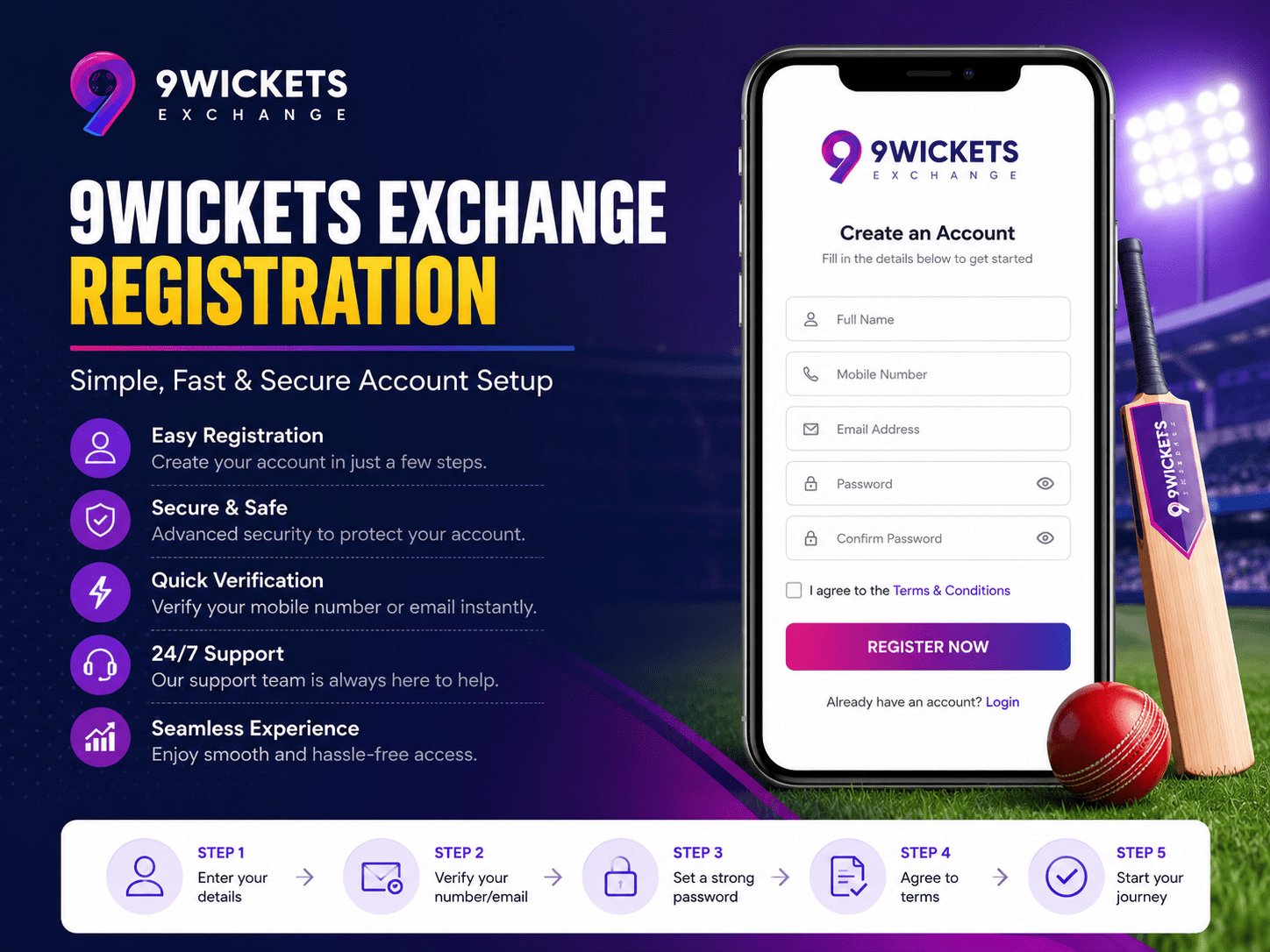
9Wickets Exchange Registration – A Complete Beginner’s Handbook
Creating an online account should be simple, secure, and easy to understand. Many people searching for 9Wickets Exchange Registration want clear information about how to create an account, what details are required, how verification works, and how to keep their profile protected after registration.
This guide explains the registration journey from beginning to end using straightforward language. Instead of focusing only on the signup form, it also covers preparation, security practices, account management, password protection, and solutions for common registration issues.
Whether you are using a desktop computer or a mobile device, understanding the registration process beforehand can help you complete it with confidence and avoid unnecessary mistakes.
Table of Contents
- Introduction
- Understanding 9Wickets Exchange Registration
- Reasons to Create an
Understanding 9Wickets Exchange Registration
Registration is the process of creating a personal account that allows users to access the platform’s available features. During signup, users are typically asked to provide basic information that helps identify and secure their account.
A registered account serves as your personal profile, allowing you to manage settings, update contact details, and access services associated with your account.
Completing registration correctly from the beginning can make future account management much easier.
Why Many Users Complete Registration
Account registration offers several practical advantages compared with browsing as a guest.
Some common reasons include:
- Access to a personal account dashboard
- Improved account security
- Easier profile management
- Password recovery options
- Personalized account settings
- Better customer support assistance
- Access across multiple devices
These features make a registered account more convenient for long-term use.
Main Advantages of Creating an Account
Personalized User Experience
After registration, users usually gain access to a customized dashboard where important account information is organized in one location.
This helps simplify navigation and improves the overall experience.
Enhanced Security
Registration enables important security protections such as:
- Password authentication
- Identity verification
- Login notifications
- Recovery options
These measures help protect personal account information.
Better Account Control
Registered users can generally manage:
- Contact details
- Password updates
- Notification settings
- Security preferences
- Profile information
Having direct control over these settings allows users to keep their account up to date.
Faster Future Access
Once an account has been created successfully, future logins become much quicker because the account already exists.
Users simply enter their login credentials instead of repeating the registration process.
Preparing Before Registration
Taking a few minutes to prepare before creating an account helps reduce errors.
Consider preparing the following:
Valid Mobile Number
Use a phone number that belongs to you and remains active.
It may be needed for:
- Verification
- Login recovery
- Security notifications
Active Email Address
If email registration is available, choose an address that you check regularly.
This makes it easier to receive:
- Verification messages
- Password reset emails
- Account notifications
Secure Password
Your password should be difficult for others to guess.
A secure password normally contains:
- Capital letters
- Small letters
- Numbers
- Symbols
Avoid using simple combinations such as:
- 12345678
- password
- qwerty
- your birthday
Strong passwords significantly improve account safety.
Information Commonly Requested During Registration
Although registration forms may change over time, users are commonly asked to provide:
- Full name
- Mobile number
- Email address
- Password
- Country or region
- Referral code (if applicable)
Always review your entries before submitting the registration form.
Step-by-Step Registration Guide
The signup process generally follows several simple stages.
Step 1 – Access the Registration Page
Open the official registration section using a supported web browser.
Ensure that your internet connection is stable before proceeding.
Step 2 – Enter Basic Information
Fill in every required field carefully.
Incorrect information may delay account verification later.
Step 3 – Create Login Credentials
Choose a secure password that is unique to this account.
Do not reuse passwords from other online services.
Step 4 – Review Your Details
Before submitting the form, double-check:
- Name spelling
- Mobile number
- Email address
- Password accuracy
Correcting mistakes now is much easier than fixing them later.
Step 5 – Submit Registration
Once everything has been reviewed, submit the completed registration form.
Depending on the platform’s procedures, additional verification may be requested before the account becomes fully active.
Registering with a Mobile Device
Smartphones are one of the most common ways to create an account.
Typical mobile registration involves:
- Opening the website using a modern browser
- Navigating to the registration page
- Entering personal information
- Creating a password
- Reviewing all details
- Completing verification if required
Using a reliable internet connection can help prevent interruptions during registration.
Desktop Registration Process
Some users prefer registering from a computer because the larger screen makes it easier to complete forms accurately.
Benefits include:
- Larger display
- Faster typing
- Easier document review
- Better visibility
- Comfortable navigation
Desktop registration and mobile registration generally follow the same sequence of steps.
Selecting a Strong Password
Your password is the first line of defense for your account.
To improve security:
- Use at least 12 characters.
- Include uppercase and lowercase letters.
- Add numbers.
- Include special characters.
- Avoid predictable words.
- Never share your password.
Changing your password periodically also helps improve long-term security.
Helpful Registration Tips
Before submitting your registration form, remember these recommendations:
- Use accurate information.
- Read every instruction carefully.
- Keep your contact details current.
- Save your login credentials securely.
- Avoid using public Wi-Fi during registration.
- Review every field before clicking submit.
- Never share verification codes with anyone.
Following these practices can help reduce registration errors and make future account management easier.
Verifying Your Newly Created Account
After submitting the registration form, the next stage is often account verification. This step helps confirm that the contact information belongs to the person creating the account.
Verification is an important security measure because it reduces fake registrations and improves account protection.
Depending on the registration method, verification may be completed through a mobile number, an email address, or another identity confirmation process.
Completing this step promptly helps ensure uninterrupted access to your account.
Mobile Verification Process
When registering with a mobile number, a verification code may be sent to the number you provided.
The general process includes:
- Enter your registered mobile number.
- Receive the verification code.
- Type the code into the verification field.
- Confirm the submission.
- Wait for successful verification.
If the code does not arrive immediately, waiting a few minutes before requesting another one is often recommended.
Email Confirmation
Some users register using an email address instead of a mobile number.
In this situation, the platform may send a verification email containing a confirmation link.
Typical steps include:
- Open your inbox.
- Locate the verification email.
- Open the message.
- Click the verification link.
- Return to your account.
If the email cannot be found, checking the spam or junk folder may help.
Logging In for the First Time
Once registration and verification have been completed, users can access their accounts using the credentials created during signup.
Typical login requirements include:
- Registered mobile number or email address
- Account password
Entering the correct information allows quick access to the account dashboard.
If login details are entered incorrectly several times, temporary security restrictions may be applied to protect the account.
Managing Your Profile
Keeping account information updated improves both security and convenience.
Information that users may be able to manage includes:
- Display name
- Contact number
- Email address
- Password
- Notification preferences
- Security settings
Reviewing these details regularly helps keep the account current.
Password Recovery Guide
Forgetting a password is common, and most platforms provide a recovery process.
A typical recovery procedure includes:
Step 1
Visit the login page.
Step 2
Choose the Forgot Password option.
Step 3
Provide your registered contact information.
Step 4
Complete the required verification.
Step 5
Create a new password.
Step 6
Sign in using your updated credentials.
When choosing a replacement password, avoid reusing passwords from other websites.
Practical Security Recommendations
Protecting an online account requires more than creating a strong password.
The following habits contribute to better account security.
Use Trusted Devices
Whenever possible, sign in only from devices that you personally control.
Public computers may store login information if users forget to sign out.
Protect Verification Codes
Verification codes should remain private.
Never disclose:
- One-time passwords
- SMS verification codes
- Recovery links
- Authentication codes
These are intended only for the account owner.
Review Account Activity
Checking recent account activity from time to time can help identify unusual behavior.
Watch for:
- Unrecognized login attempts
- Unknown devices
- Unexpected notifications
- Changes you did not make
If suspicious activity appears, update your password immediately and review your security settings.
Keep Contact Details Current
An outdated phone number or email address can make account recovery more difficult.
Updating contact information promptly ensures you continue receiving important notifications.
Common Registration Challenges
Although registration is generally simple, users occasionally encounter issues.
Below are several common situations.
Incorrect Personal Information
Typing errors may result in verification delays.
Examples include:
- Misspelled names
- Incorrect mobile numbers
- Wrong email addresses
Carefully reviewing each field before submission helps prevent these mistakes.
Verification Delay
Sometimes verification messages take longer than expected.
Possible causes include:
- Temporary network congestion
- Email filtering
- Mobile carrier delays
Waiting briefly before requesting another verification message is often sufficient.
Weak Password Warning
Some registration systems reject passwords that do not meet minimum security standards.
To strengthen a password:
- Increase its length.
- Add uppercase letters.
- Include lowercase letters.
- Insert numbers.
- Use special characters.
Avoid using predictable information such as birthdays or names.
Existing Account Detected
Attempting to register with contact information that is already associated with an existing account may generate an error.
Instead of creating another account, use the password recovery option if you no longer remember your login credentials.
Mobile and Desktop Registration Comparison
Both registration methods provide similar functionality, but each offers different advantages.
| Feature | Mobile Device | Desktop Computer |
|---|---|---|
| Convenience | Excellent | Very Good |
| Portability | Excellent | Limited |
| Screen Size | Compact | Large |
| Typing Comfort | Good | Excellent |
| Form Review | Good | Excellent |
| Suitable for Beginners | Excellent | Excellent |
Users can choose whichever device is most comfortable for them.
Privacy Best Practices
Protecting personal information should always remain a priority.
Helpful recommendations include:
- Do not share account credentials.
- Keep passwords confidential.
- Use secure internet connections.
- Sign out after using shared devices.
- Review your security settings regularly.
- Keep recovery information updated.
Following these practices helps reduce the likelihood of unauthorized access.
Good Habits After Registration
Creating an account is only the beginning.
Maintaining good account habits can improve both convenience and security over time.
Examples include:
- Updating passwords periodically.
- Monitoring account activity.
- Reviewing profile information.
- Reading important notifications.
- Keeping contact details current.
- Avoiding suspicious login requests.
- Using secure devices whenever possible.
These simple routines contribute to a safer and more reliable account experience.
Preparing for Long-Term Account Management
Successful account management involves more than completing the initial registration.
Regularly checking your account settings, maintaining accurate personal information, and following basic cybersecurity practices will help keep your account accessible and protected.
By understanding the registration process, verification procedures, login methods, password recovery options, and security recommendations, new users can enjoy a smoother experience while minimizing common registration problems.
Final Conclusion
Creating a 9Wickets Exchange account is a straightforward process when you understand each stage of registration and follow the instructions carefully. Preparing accurate information, choosing a strong password, and completing verification promptly can make the signup experience simple and efficient.
Good account security does not end after registration. Regularly reviewing your profile, updating your password, protecting verification codes, and using trusted devices are important habits that help keep your account secure over time.
Whether you are registering for the first time or returning after a long break, following the guidance in this article can help you avoid common mistakes and manage your account with greater confidence. A careful approach during registration lays the foundation for a smoother and more secure experience in the future.
Keep reading
Related guides
Guide
Free 9Wickets Registration Guide: Steps & Tips
Free 9Wickets Registration: Complete Guide to Creating an Account Safely Introduction free 9wickets registration Online gaming and sports entertainment platforms have become increasingly popular among…
Read the guide →
Guide
9Wickets Win Explained: Complete Guide to Betting Features, Sports Markets, and Smarter Wagering
9Wickets Win Explained: Complete Guide to Betting Features, Sports Markets, and Smarter Wagering The popularity of online sports betting continues to grow as more…
Read the guide →
Guide
9Wicket App Login: Complete Mobile Access Guide Today
Introduction Completing a 9wicket app login is the first step toward accessing your account on a mobile device. Whether you are a new member…
Read the guide →Ready to put this guide to work?
Open a 9Wickets account with bKash, Nagad or Rocket, or talk to support if you need a hand.